Quick View
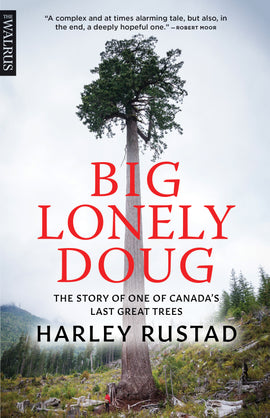
{"id":6813789257787,"title":"Big Lonely Doug","handle":"big-lonely-doug","description":"\u003cp\u003e\u003cstrong\u003eFinalist, Shaughnessy Cohen Prize for Political Writing\u003c\/strong\u003e\u003cbr\u003e\n\u003cstrong\u003eFinalist, Banff Mountain Book Competition\u003c\/strong\u003e\u003cbr\u003e\n\u003cstrong\u003eFinalist, BC Book Prize \u003c\/strong\u003e\u003cbr\u003e\n\u003cstrong\u003eGlobe and Mail best books of 2018\u003cbr\u003e\nCBC best Canadian non-fiction of 2018\u003c\/strong\u003e\u003c\/p\u003e\n\u003cp\u003e\u003cstrong\u003eIn the tradition of John Vaillant’s modern classic \u003cem\u003eThe Golden Spruce \u003c\/em\u003ecomes a story of the unlikely survival of one of the largest and oldest trees in Canada.\u003c\/strong\u003e\u003c\/p\u003e\n\u003cp\u003eOn a cool morning in the winter of 2011, a logger named Dennis Cronin was walking through a stand of old-growth forest near Port Renfrew on Vancouver Island. He came across a massive Douglas fir the height of a twenty-storey building. Instead of allowing the tree to be felled, he tied a ribbon around the trunk, bearing the words “Leave Tree.” The forest was cut but the tree was saved. The solitary Douglas fir, soon known as Big Lonely Doug, controversially became the symbol of environmental activists and their fight to protect the region’s dwindling old-growth forests.\u003c\/p\u003e\n\u003cp\u003eOriginally featured as a long-form article in \u003cem\u003eThe Walrus\u003c\/em\u003e that garnered a National Magazine Award (Silver), \u003cem\u003eBig Lonely Doug \u003c\/em\u003eweaves the ecology of old-growth forests, the legend of the West Coast’s big trees, the turbulence of the logging industry, the fight for preservation, the contention surrounding ecotourism, First Nations land and resource rights, and the fraught future of these ancient forests around the story of a logger who saved one of Canada's last great trees.\u003c\/p\u003e","published_at":"2022-03-23T13:10:51-04:00","created_at":"2022-03-23T09:18:20-04:00","vendor":"House of Anansi Press Inc","type":"","tags":["Adult Course Adoption","Adult Environmentalism","Adult Nonfiction","By (author) Rustad Harley","pub date: 2018-09-04","The Walrus Books"],"price":1895,"price_min":1895,"price_max":2299,"available":true,"price_varies":true,"compare_at_price":null,"compare_at_price_min":0,"compare_at_price_max":0,"compare_at_price_varies":false,"variants":[{"id":40205702529083,"title":"trade paperback","option1":"trade paperback","option2":null,"option3":null,"sku":"9781487003111","requires_shipping":true,"taxable":true,"featured_image":null,"available":true,"name":"Big Lonely Doug - trade paperback","public_title":"trade paperback","options":["trade paperback"],"price":2299,"weight":400,"compare_at_price":null,"inventory_management":"shopify","barcode":"9781487003111","requires_selling_plan":false,"selling_plan_allocations":[]},{"id":40205704265787,"title":"epub","option1":"epub","option2":null,"option3":null,"sku":"9781487003128","requires_shipping":false,"taxable":true,"featured_image":null,"available":true,"name":"Big Lonely Doug - epub","public_title":"epub","options":["epub"],"price":1895,"weight":0,"compare_at_price":null,"inventory_management":null,"barcode":"9781487003128","requires_selling_plan":false,"selling_plan_allocations":[]},{"id":40205704659003,"title":"mobi","option1":"mobi","option2":null,"option3":null,"sku":"9781487003135","requires_shipping":false,"taxable":true,"featured_image":null,"available":true,"name":"Big Lonely Doug - mobi","public_title":"mobi","options":["mobi"],"price":1895,"weight":0,"compare_at_price":null,"inventory_management":null,"barcode":"9781487003135","requires_selling_plan":false,"selling_plan_allocations":[]}],"images":["\/\/houseofanansi.com\/cdn\/shop\/products\/BNCImageAPI_d75de532-0be6-42ed-88ec-69aa614c24bc.jpg?v=1676185356"],"featured_image":"\/\/houseofanansi.com\/cdn\/shop\/products\/BNCImageAPI_d75de532-0be6-42ed-88ec-69aa614c24bc.jpg?v=1676185356","options":["Title"],"media":[{"alt":null,"id":23246346551355,"position":1,"preview_image":{"aspect_ratio":0.647,"height":2553,"width":1651,"src":"\/\/houseofanansi.com\/cdn\/shop\/products\/BNCImageAPI_d75de532-0be6-42ed-88ec-69aa614c24bc.jpg?v=1676185356"},"aspect_ratio":0.647,"height":2553,"media_type":"image","src":"\/\/houseofanansi.com\/cdn\/shop\/products\/BNCImageAPI_d75de532-0be6-42ed-88ec-69aa614c24bc.jpg?v=1676185356","width":1651}],"requires_selling_plan":false,"selling_plan_groups":[],"content":"\u003cp\u003e\u003cstrong\u003eFinalist, Shaughnessy Cohen Prize for Political Writing\u003c\/strong\u003e\u003cbr\u003e\n\u003cstrong\u003eFinalist, Banff Mountain Book Competition\u003c\/strong\u003e\u003cbr\u003e\n\u003cstrong\u003eFinalist, BC Book Prize \u003c\/strong\u003e\u003cbr\u003e\n\u003cstrong\u003eGlobe and Mail best books of 2018\u003cbr\u003e\nCBC best Canadian non-fiction of 2018\u003c\/strong\u003e\u003c\/p\u003e\n\u003cp\u003e\u003cstrong\u003eIn the tradition of John Vaillant’s modern classic \u003cem\u003eThe Golden Spruce \u003c\/em\u003ecomes a story of the unlikely survival of one of the largest and oldest trees in Canada.\u003c\/strong\u003e\u003c\/p\u003e\n\u003cp\u003eOn a cool morning in the winter of 2011, a logger named Dennis Cronin was walking through a stand of old-growth forest near Port Renfrew on Vancouver Island. He came across a massive Douglas fir the height of a twenty-storey building. Instead of allowing the tree to be felled, he tied a ribbon around the trunk, bearing the words “Leave Tree.” The forest was cut but the tree was saved. The solitary Douglas fir, soon known as Big Lonely Doug, controversially became the symbol of environmental activists and their fight to protect the region’s dwindling old-growth forests.\u003c\/p\u003e\n\u003cp\u003eOriginally featured as a long-form article in \u003cem\u003eThe Walrus\u003c\/em\u003e that garnered a National Magazine Award (Silver), \u003cem\u003eBig Lonely Doug \u003c\/em\u003eweaves the ecology of old-growth forests, the legend of the West Coast’s big trees, the turbulence of the logging industry, the fight for preservation, the contention surrounding ecotourism, First Nations land and resource rights, and the fraught future of these ancient forests around the story of a logger who saved one of Canada's last great trees.\u003c\/p\u003e"}
{"AlsoRecommendedISBN_2":"9781487007799","AlsoRecommendedISBN_3":"9781770893894","AlsoRecommendedISBN_4":"9781770899919","BASICMainSubject":"NAT014000","BASICMainSubjectLiteral":"NATURE\/Ecosystems \u0026 Habitats\/Forests \u0026 Rainforests","BiographicalNote":"\u003cp\u003e\u003cstrong\u003eHARLEY RUSTAD\u003c\/strong\u003e is an editor at \u003cem\u003eThe Walrus\u003c\/em\u003e magazine. His articles and photography have been published in magazines, newspapers, and online outlets including \u003cem\u003eThe Walrus\u003c\/em\u003e, \u003cem\u003eOutside\u003c\/em\u003e, the \u003cem\u003eGlobe and Mail\u003c\/em\u003e, \u003cem\u003eGeographical\u003c\/em\u003e, \u003cem\u003eReader's Digest\u003c\/em\u003e, the \u003cem\u003eGuardian\u003c\/em\u003e, and CNN. He has reported from India, Nepal, Cuba, and across Canada. Born on Salt Spring Island, BC, he now lives in Toronto.\u003c\/p\u003e","BISACSubjectLiteral_0":"NATURE \/ Ecosystems \u0026amp; Habitats \/ Forests \u0026amp; Rainforests","BISACSubjectLiteral_1":"NATURE \/ Environmental Conservation \u0026amp; Protection","BISACSubjectLiteral_2":"NATURE \/ Plants \/ Trees","BISACSubject_0":"NAT014000","BISACSubject_1":"NAT011000","BISACSubject_2":"NAT034000","ContributorBio_0":"\u003cp\u003e\u003cstrong\u003eHARLEY RUSTAD\u003c\/strong\u003e is an editor at \u003cem\u003eThe Walrus\u003c\/em\u003e magazine. His articles and photography have been published in magazines, newspapers, and online outlets including \u003cem\u003eThe Walrus\u003c\/em\u003e, \u003cem\u003eOutside\u003c\/em\u003e, the \u003cem\u003eGlobe and Mail\u003c\/em\u003e, \u003cem\u003eGeographical\u003c\/em\u003e, \u003cem\u003eReader's Digest\u003c\/em\u003e, the \u003cem\u003eGuardian\u003c\/em\u003e, and CNN. He has reported from India, Nepal, Cuba, and across Canada. Born on Salt Spring Island, BC, he now lives in Toronto.\u003c\/p\u003e\n","ContributorRole_0":"By (author)","Contributor_0":"Rustad, Harley","Description":"\u003cp\u003e\u003cstrong\u003eFinalist, Shaughnessy Cohen Prize for Political Writing\u003c\/strong\u003e\u003cbr\u003e\n\u003cstrong\u003eFinalist, Banff Mountain Book Competition\u003c\/strong\u003e\u003cbr\u003e\n\u003cstrong\u003eFinalist, BC Book Prize \u003c\/strong\u003e\u003cbr\u003e\n\u003cstrong\u003eGlobe and Mail best books of 2018\u003cbr\u003e\nCBC best Canadian non-fiction of 2018\u003c\/strong\u003e\u003c\/p\u003e\n\u003cp\u003e\u003cstrong\u003eIn the tradition of John Vaillant’s modern classic \u003cem\u003eThe Golden Spruce \u003c\/em\u003ecomes a story of the unlikely survival of one of the largest and oldest trees in Canada.\u003c\/strong\u003e\u003c\/p\u003e\n\u003cp\u003eOn a cool morning in the winter of 2011, a logger named Dennis Cronin was walking through a stand of old-growth forest near Port Renfrew on Vancouver Island. He came across a massive Douglas fir the height of a twenty-storey building. Instead of allowing the tree to be felled, he tied a ribbon around the trunk, bearing the words “Leave Tree.” The forest was cut but the tree was saved. The solitary Douglas fir, soon known as Big Lonely Doug, controversially became the symbol of environmental activists and their fight to protect the region’s dwindling old-growth forests.\u003c\/p\u003e\n\u003cp\u003eOriginally featured as a long-form article in \u003cem\u003eThe Walrus\u003c\/em\u003e that garnered a National Magazine Award (Silver), \u003cem\u003eBig Lonely Doug \u003c\/em\u003eweaves the ecology of old-growth forests, the legend of the West Coast’s big trees, the turbulence of the logging industry, the fight for preservation, the contention surrounding ecotourism, First Nations land and resource rights, and the fraught future of these ancient forests around the story of a logger who saved one of Canada's last great trees.\u003c\/p\u003e","EAN":"9781487003135","excerpt_0":"https:\/\/biblioshare.org\/BNCservices\/BNCServices.asmx\/Samples?token=fcf85c1c1b298e99\u0026amp;ean=9781487003135\u0026amp;SAN=\u0026amp;Perspective=excerpt\u0026amp;FileNumber=0","Height":"8.5","HeightCode":"in","Imprint":"The Walrus Books","MetaKeywords":"conservation; environmental sustainability; british columbia; hidden life of trees; colonialism; capitalism; climate change; earth day; logging; forestry; haida gwaii; environmentally friendly gifts; wildlife; nature; deforestation; canlit; canadian history; ecology; color photographs; national magazine award; bee time mark winston; the invention of nature; planet earth; blue planet; john vaillant; books for dad; fathers day","NumberOfPages":"384","OtherText_Accolades_0":"Among the joys of good writing and deep research are the ways in which it can reinvigorate a place you thought you knew, inviting you to see it, and feel it, afresh. This is just one of the gifts of Big Lonely Doug, an avatar of the west coast rainforest that, through Harley Rustad’s insightful and nuanced telling, embodies this vital ecosystem in all its beauty and complexity. Reading this book made me want to drop everything and meet Doug in person.","OtherText_Accolades_0_Auth":"John Vaillant, author of The Golden Spruce","OtherText_Accolades_1":"Blending thoughtful historical research with vivid reportage, Harley Rustad begins with the story of a single tree but masterfully widens his scope to encompass so much more: all the other grand old trees that have been felled on Vancouver Island, all those that have been saved, and most importantly, why it all matters. A complex and at times alarming tale, but also, in the end, a deeply hopeful one.","OtherText_Accolades_1_Auth":"Robert Moor, author of On Trails","OtherText_Accolades_2":"Having spent time, personally, with Big Lonely Doug, and wandering through the last of our ancient forests in British Columbia, it's never been more clear to me how imperative it is for us as humans to recognize the magnificence of these ancient trees and forests and do everything that we can to preserve them. With less than 1 percent of the original old-growth Douglas-fir stands left on B.C.’s coast, it’s time for Canadians to embrace Big Lonely Doug and his fellow survivors, and keep them standing tall. Harley Rustad’s story brings both the majesty and adversity of Big Lonely Doug a little closer to home.","OtherText_Accolades_2_Auth":"Edward Burtynsky","OtherText_Accolades_3":"You can see the forest for the trees, at least when the trees in question are singular giants like Big Lonely Doug, and the writer deftly directing your gaze is Harley Rustad. This sweeping yet meticulous narrative reveals the complex human longings tangled up in B.C.’s vanishing old-growth forests — cathedrals or commodities, depending on who you ask, and the future hinges on our answer.","OtherText_Accolades_3_Auth":"Kate Harris, author of Lands of Lost Borders","OtherText_Accolades_4":"An affecting story of one magnificent survivor tree set against a much larger narrative — the old conflict between logging and the environmental movement, global economics, and the fight to preserve the planet’s most endangered ecosystems. If you love trees and forests, this book is for you.","OtherText_Accolades_4_Auth":"Charlotte Gill, author of Eating Dirt","OtherText_Back_cover_copy_0":"\u003cul\u003e\u003cli\u003eHarley Rustad is an editor at \u003cem\u003eThe Walrus\u003c\\\/em\u003e, a major Canadian magazine, who has contributed to numerous long-form articles, including “Big Lonely Doug,” which won a National Magazine Award. He has also received an Honourable Mention from the National Magazine Awards for a feature on digital mapping in Belcher Islands, Nunavut, as well as a Collective Nomination for an investigation into a failed immigration program in Prince Edward County. He is poised to be a breakout debut author.\u003c\\\/li\u003e\\r\\n\u003cli\u003eThere is a perennial interest in books on the natural world and in particular on trees, such as the surprise international bestseller \u003cem\u003eThe Hidden Life of Trees\u003c\\\/em\u003e by Peter Wohleben and the award-winning, bestselling, \u003cem\u003eThe Golden Spruce\u003c\\\/em\u003e by John Vaillant.\u003c\\\/li\u003e\\r\\n\u003c\\\/ul\u003e","OtherText_Description_for_R_0":"\u003cp\u003eThe morning of that day in the winter of 2011 began like any other. Known as cutblock number 7190 by his employer, Teal Jones, the twelve hectares fringing the east bank of the Gordon River a half-hour’s drive north of Port Renfrew was a prime example of kind of old-growth forest that once spanned Vancouver Island from tip to tip and coast to coast. This small patch of trees held black bears and Roosevelt elk, with the possibility of wolves and cougars passing through. It held red-capped woodpeckers knocking on standing deadwood, squirrels and chipmunks nibbling on cones to extract the seeds, and fungi the size of a dinner plate protruding from the trunks of some of the largest trees in the world. New green seedlings sprouted from old fallen stumps. Cronin brushed through the undergrowth, his jeans damp with persistent dew. Mounds of lime-green moss covering a thick bed of decaying tree needles were moist and soft underfoot—absorbing sound like a sponge. For now, the forest was still.\u003c\/p\u003e\u003cp\u003eCutblock 7190 also held great value for his timber company. At roughly twice the size of twelve soccer fields, the flat plateau near the base of Edinburg Mountain in the scope of the valley was a tiny sliver of forest. But it held some towering and valuable trees. The price of timber fluctuates every year, depending on species and market, but that year old growth was fetching between $80 and $100 per cubic metre of wood. (One cubic metre is roughly the size of a telephone pole.) West Coast old-growth forests produce between 800 to 1,200 cubic metres of wood per hectare, roughly twice as much timber as second growth. The gross value of the cut wood in this one cutblock in the Gordon River Valley could yield approximately a million dollars.\u003c\/p\u003e\u003cp\u003eWorking in tandem with Walter Van Hell, Cronin began the survey at the low side of cutblock 7190, where he could hear the Gordon River thundering on the other side of a steep gorge. Come spring, salmon fry would be wriggling free of the pebbled river bottom and make their first swim downstream to open water; come fall, grown fish would hurl themselves upstream to spawn in the clear waters. He walked the contour of the cutblock. At regular intervals of a couple dozen metres or so, he reached into his vest pocket for a roll of neon-orange plastic ribbon and tore off a strip. The colour had to be bright to catch the eye of the fallers who would follow in the months to come. He tied the inch-wide sashes around small trees or low-hanging branches to mark the edges of the cutblock. “Falling Boundary” was repeated in block letters along each ribbon. The forest practice code stipulated that the company had to leave a buffer of intact forest 50 metres up from a river, especially one that was known to be a spawning ground for salmon. Some engineers keep tight to those regulations to try to extract as much timber as possible from a given area. They fall under the category of what’s known as a “timber pig,” someone who cuts and hauls trees by a singular mantra: log it, burn it, pave it. The sentiment is two-fold: ecology comes secondary to economics and these forests exist to be harvested. But Cronin was often generous with these buffer zones, leaving 60 or 75 metres up from a river—as much as he could without drawing the ire of coworkers or bosses.\u003c\/p\u003e\u003cp\u003eOnce the twelve hectares was enclosed in orange ribbon, Cronin crisscrossed through the cutblock surveying the pitches and gradients of the land. It was a slow task, clambering over fallen nurse logs and through thickets of bush. His goal was to determine where a road could be ploughed through the forest. It takes a specific skill to see through dense trees and haphazard undergrowth and plot a sure course that could allow for the safest and easiest extraction of logs. Maneuvering over undulating land layered with deadfall and vegetation, he marked a direct line through the forest with strips off another roll of ribbon, this one hot pink and marked with the words “Road Location.” He traversed any creek he came across and flagged it in red ribbon. When he was done, the green-and-brown grove was lit up with flashes of colour.\u003c\/p\u003e\u003cp\u003eWhile working, Cronin was followed by a Steller’s jay—the provincial bird of British Columbia—which took particular interest in his work. “He would follow me around like a dog,” Cronin said. “I would be traversing creeks, taking my measurements and bearings, and he’s hopping behind me picking up the bugs as I stirred them up.” But once Cronin traversed a creek that separated cutblock 7190 with another patch of old growth slated for clearcut to the southeast, the jay stopped. “He would never cross that creek. We would pick him up again when we crossed back,” he says.\u003c\/p\u003e\u003cp\u003eThe sun broke through the canopy in long beams that spot-lit sword ferns and huckleberry bushes growing from the forest floor. But as Cronin waded through the thigh-high undergrowth, something caught his eye: a Douglas fir, larger than the rest, with a trunk so wide that it could have hidden his truck behind. He scrambled up the mound of sloughed bark and dead needles that had accumulated over centuries around the base of the giant tree.\u003c\/p\u003e\u003cp\u003eDennis Cronin looked up.\u003c\/p\u003e\u003cp\u003eThe tree dominated the forest; a monarch of its species. A crown of dark-green, glossy needles flitted in the breeze well above the canopy of the rest of the forest, made up of a handful of exceptionally large cedars and firs but mostly younger and thinner hemlock. The tree’s trunk was limbless until a great height, like many of the oldest Douglas firs he had come across in his career. The species often loses its lower branches that grow in the shadow of the forest’s canopy, directing its attention to those that enjoy the maximum of the sun’s energy. Many of these large and old Douglas firs have trunks that grow twisted and gnarled, with clear marks of disease. This tree’s trunk sported few knots and a grain that appeared straight: it was a wonderful specimen of timber, Cronin thought.\u003c\/p\u003e\u003cp\u003e He had spent the majority of his life walking through old-growth forests, under the canopies of some of the largest trees in the country. He had seen hundreds of giants, but this one tree stood above the rest. Douglas firs and Western red cedar are the two species in this area that are the most wind resistant, so are often stable enough to outlast storms and continue to grow through several iterations of a forest over a millennium. Still, many of the larger, centuries-old examples of these two species break off at their more fragile tops and their centres, over time, fill with water and rot. They become unstable and prone to blowdown. The timber inside begins to lose its value. The majority of the trees Cronin had flagged over his career, marking them for protection, were ones that he considered to be non-merchantable wood: the trunks were too twisted or too flawed. He could tell by looking at knots along a trunk if there was rot inside. For these trees, Cronin thought, why cut them down? Instead of a timber company deriving little value from these diseased or hollow trees, they can be left standing to serve the remainder of their lives as wildlife habitats.\u003c\/p\u003e\u003cp\u003eBut when Dennis Cronin laid eyes on the large Douglas fir in cutblock 7190, he could see immense timber value. “I’m a logger and I’ve taken out millions of trees,” Cronin said. “But I was impressed.” The limbless trunk held only a minor twist, and the bark looked healthy. He couldn’t know with one hundred percent certainty, however. “You don’t know until you put a saw into it and by that point it’s too late,” Cronin said. But the tree exhibited few of the exterior telltale signs of rot or disease.\u003c\/p\u003e \u003cp\u003eAs well as an encyclopedic knowledge of these forests, Cronin could also see through the bark of a tree to its very core and see dollars. “I can look at a tree and tell if it’s got value or not. If it’s not twisted, if the bark is healthy, if the limbs are healthy,” Cronin said. “That one had value.” Encased within the deeply crevassed and corky bark of this single tree lay enough wood to fill four logging trucks to capacity with some to spare. If milled into dimensional lumber—two-by-fours, two-by-sixes, and the like—it could be used to frame five 2,000-square-foot houses. At first glance, he assessed the single tree in unprocessed log value as around twenty thousand dollars. But since it was a Douglas fir, with its coveted warm colour and pronounced grain, the tree could be turned into higher-priced beams and posts for houses in Victoria and Vancouver, or shipped across the Pacific Ocean to Japan. The single tree that the logger stood under could fetch more than fifty thousand dollars.\u003c\/p\u003e\u003cp\u003eUsing his hand-held hypsometre, a device to measure a standing tree’s height using triangulation of measurements, Cronin took readings from the base and the top of the tree and estimated its height at approximately seventy metres—one of the largest he had ever come across in his career—around the height of a twenty-story apartment building. Using a tape, he measured the tree’s breast height girth. It appeared just shy of the Red Creek Fir, the largest Douglas fir in the world, located a couple valleys away. Cronin didn’t know it then, but he had found one of the largest trees in the country. “When I walked up to it, I passed some big firs and some really big cedars—twelve footers, maybe,” Cronin said, referring to the diameter of the trees. But this one fir dominated the rest. “He towered above the forest. He stuck out like a sore thumb.”\u003c\/p\u003e\n \u003cp\u003eCronin could have moved on, continuing through the undergrowth to finish the job of mapping and flagging the cutblock for the fallers. The tree, with the rest of the forest around it, would have stood patiently awaiting its inevitable fate. The fallers would have arrived months later and the tree would have been brought down in a thunderclap heard kilometres away, hauled from the valley, loaded onto logging trucks, and taken to a mill to be broken into its most useful and most valuable parts.\u003c\/p\u003e\n \u003cp\u003eBut Dennis Cronin lingered under the big tree. He walked around a circumference so great it would take more than six people holding hands in a circle to wrap around its base. Cronin had spent four decades working on logging crews and as a forest engineer, countless days working in the forests of Vancouver Island, and had encountered thousands of enormous trees over his career.\u003c\/p\u003e\n \u003cp\u003eInstead of moving on, Cronin reached into his vest pocket for a ribbon he rarely used, tore off a strip, and wrapped it around the broad base of the great Douglas fir’s trunk. The tape wasn’t pink or orange or red but green, and along its length were the words “Leave Tree.”\u003c\/p\u003e","OtherText_Long_description_1":"\u003cul\u003e\u003cli\u003eHarley Rustad is an editor at \u003cem\u003eThe Walrus\u003c\/em\u003e, a major Canadian magazine, who has contributed to numerous long-form articles, including “Big Lonely Doug,” which won a National Magazine Award. He has also received an Honourable Mention from the National Magazine Awards for a feature on digital mapping in Belcher Islands, Nunavut, as well as a Collective Nomination for an investigation into a failed immigration program in Prince Edward County. He is poised to be a breakout debut author.\u003c\/li\u003e\n\u003cli\u003eThere is a perennial interest in books on the natural world and in particular on trees, such as the surprise international bestseller \u003cem\u003eThe Hidden Life of Trees\u003c\/em\u003e by Peter Wohleben and the award-winning, bestselling, \u003cem\u003eThe Golden Spruce\u003c\/em\u003e by John Vaillant.\u003c\/li\u003e\n\u003c\/ul\u003e","OtherText_Previous_review_q_0":"\u003cp\u003e\u003cstrong\u003eREVIEW COPIES\u003c\\\/strong\u003e:\u003c\\\/p\u003e\\r\\n\u003cul\u003e\u003cli\u003ePublishers Weekly\u003c\\\/li\u003e\\r\\n\u003cli\u003eBooklist\u003c\\\/li\u003e\\r\\n\u003cli\u003eKirkus Reviews\u003c\\\/li\u003e\\r\\n\u003c\\\/ul\u003e","OtherText_Review_0":"\u003cp\u003e“[Rustad’s] microscale descriptions of the landscape and how commercial forestry has changed it bring you into the depths of Vancouver Island.” — \u003cstrong\u003e\u003cem\u003eOutside Magazine\u003c\/em\u003e\u003c\/strong\u003e\u003c\/p\u003e","OtherText_Review_0_Src":"Outside Magazine","OtherText_Review_1":"\u003cp\u003e“Rustad, a Salt Spring Island native, digs into the B.C. psyche with his discussions of old growth forests, big trees, the logging industry, ecotourism, and First Nations rights and issues.” — \u003cstrong\u003e\u003cem\u003eVancouver Sun\u003c\/em\u003e\u003c\/strong\u003e\u003c\/p\u003e","OtherText_Review_1_Src":"Vancouver Sun","OtherText_Review_2":"\u003cp\u003e“[Harley Rustad] is a gifted researcher and writer and a valuable enabler whose book is a must-read for anyone interested in ecology.” — \u003cstrong\u003e\u003cem\u003eWinnipeg Free Press\u003c\/em\u003e\u003c\/strong\u003e\u003c\/p\u003e","OtherText_Review_2_Src":"Winnipeg Free Press","OtherText_Review_3":"\u003cp\u003e“[A] very timely narrative.” — \u003cstrong\u003e\u003cem\u003eToronto Star\u003c\/em\u003e\u003c\/strong\u003e\u003c\/p\u003e","OtherText_Review_3_Src":"Toronto Star","OtherText_Review_4":"\u003cp\u003e“The story of \u003cem\u003eBig Lonely Doug\u003c\/em\u003e unfolds in marvellous detail, with liberal doses of humour, pathos, and conflict.” — \u003cstrong\u003e\u003cem\u003eForeword Reviews\u003c\/em\u003e\u003c\/strong\u003e\u003c\/p\u003e","OtherText_Review_4_Src":"Foreword Reviews","OtherText_Review_5":"\u003cp\u003e“[Harley Rustad] weaves the ecology of the rainforests of Vancouver Island, the legends around them, the business of logging pitted against the environmentalist movements, the contentious issue of ecotourism, and the rights of First Nations into a compelling, fascinating read.” — \u003cstrong\u003e\u003cem\u003eDesi News\u003c\/em\u003e\u003c\/strong\u003e\u003c\/p\u003e","OtherText_Review_5_Src":"Desi News","OtherText_ShortDescription_0":"The story one of the largest trees in Canada whose unlikely survival and discovery sheds light on environmentalism, climate change and ecotourism.","PrizeCodeText_0":"Short-listed","PrizeCodeText_1":"Short-listed","PrizeCodeText_2":"Short-listed","PrizeCode_0":"04","PrizeCode_1":"04","PrizeCode_2":"04","PrizeName_0":"Shaughnessy Cohen Prize for Political Writing","PrizeName_1":"Banff Mountain Book Competition","PrizeName_2":"BC Book Prize","PrizeName_3":"Globe and Mail best books of 2018","PrizeName_4":"CBC best Canadian non-fiction of 2018","PrizeYear_3":"2018","PrizeYear_4":"2018","ProductFormDescription":"mobi","PublicationDate":"2018-09-04","Publisher":"House of Anansi Press Inc","ShortDescription":"The story one of the largest trees in Canada whose unlikely survival and discovery sheds light on environmentalism, climate change and ecotourism.","Subtitle":"The Story of One of Canada’s Last Great Trees","Width":"5.5","WidthCode":"in"}