


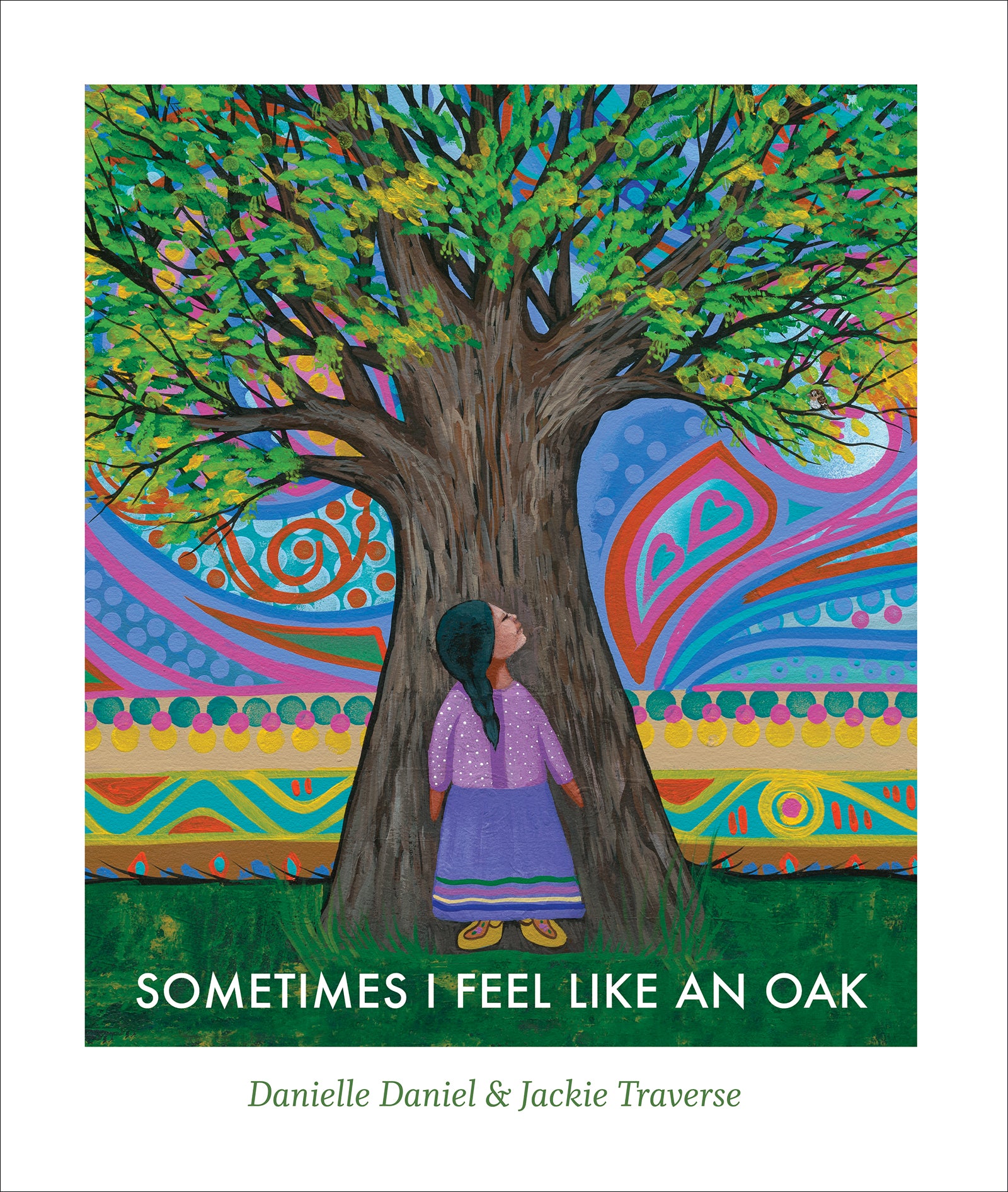
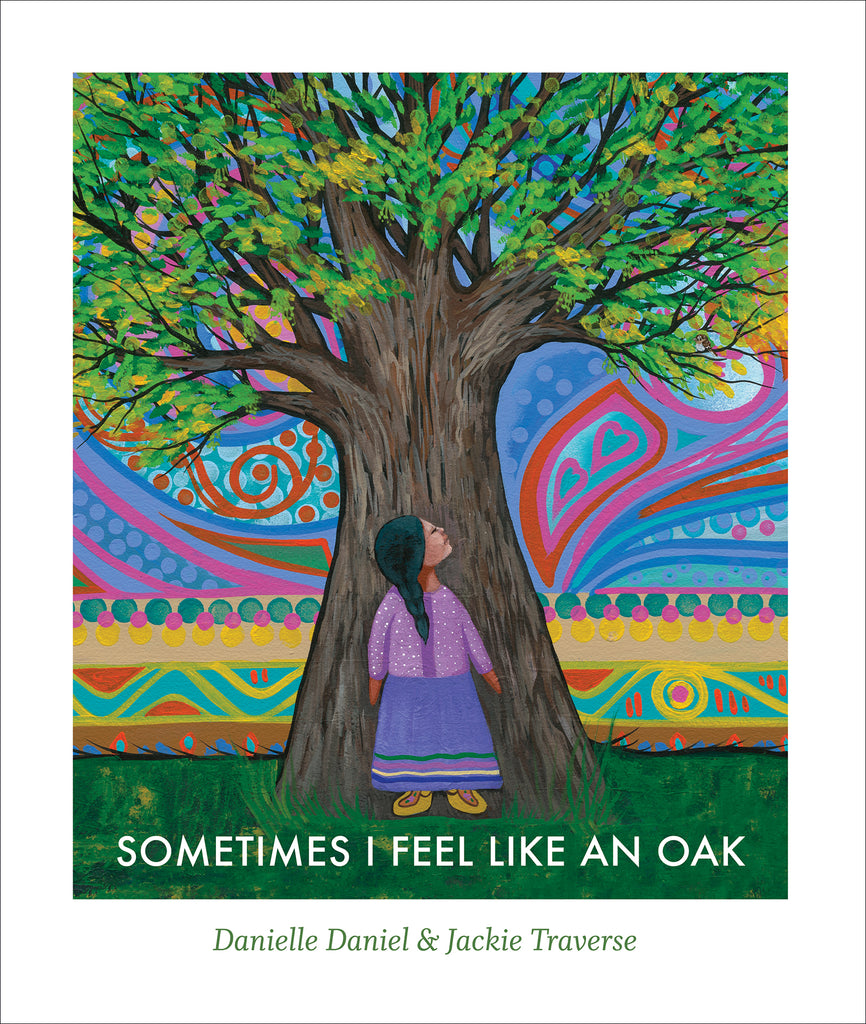

Following the success of Sometimes I Feel Like a Fox and Sometimes I Feel Like a River, this companion book explores the nature and beauty of trees.
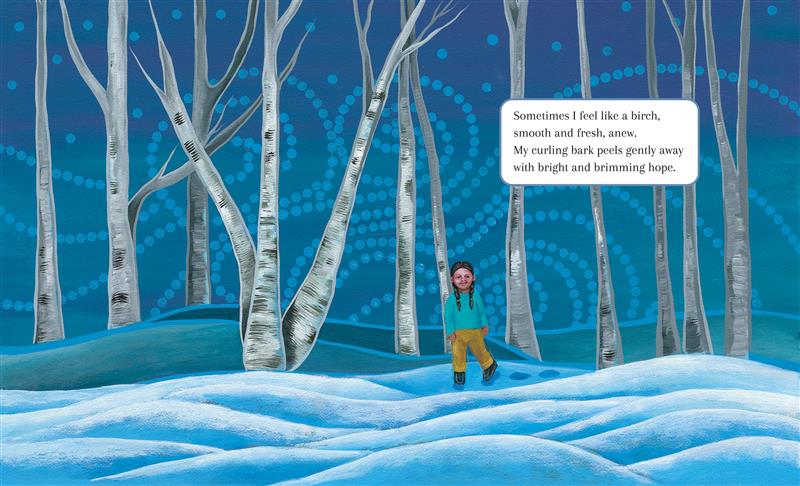
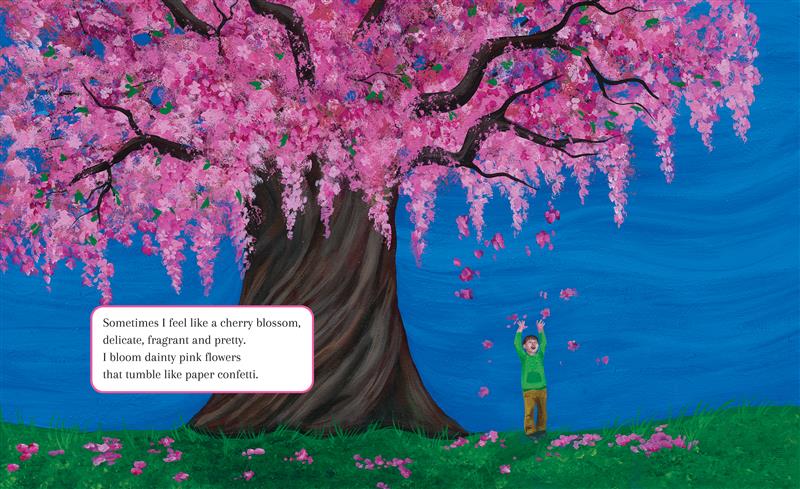
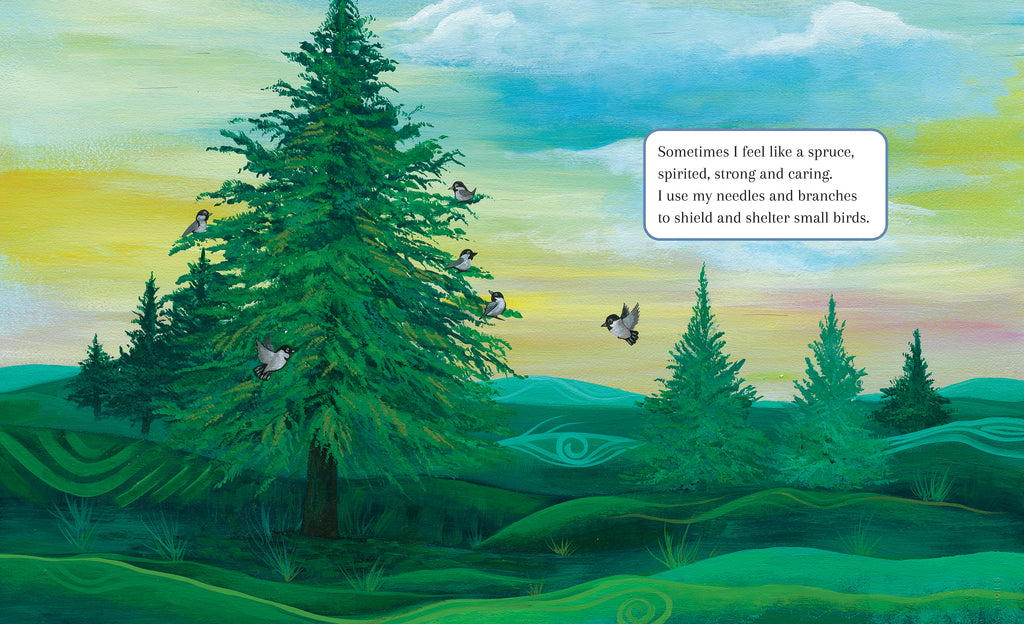
Twelve lyrical poems look at twelve different trees, from early spring to deep winter. In each poem, a child identifies with a feature of the tree — such as the smooth trunk of a birch whose bark has peeled away, the strong branches of a spruce that shelter small birds or the pink flowers of a cherry blossom that tumble like confetti. The poems provide an opportunity to learn about each tree, inspiring us to look afresh at the trees around us — whether in the schoolyard, neighborhood or park — and get to know them better.
Danielle Daniel’s passion for trees is beautifully matched by Jackie Traverse’s paintings, which bring each tree to life. In the pages following the poems, children are invited to consider what different kinds of trees might mean to them. In an author’s note, Danielle Daniel shares her belief, similar to her Algonquin ancestors’, that trees are sentient beings with much to give and teach us.
Key Text Features
illustrations
author’s note
poems
Correlates to the Common Core States Standards in English Language Arts:
CCSS.ELA-LITERACY.RL.K.5
Recognize common types of texts (e.g., storybooks, poems).
CCSS.ELA-LITERACY.RL.K.6
With prompting and support, name the author and illustrator of a story and define the role of each in telling the story.
CCSS.ELA-LITERACY.RL.1.4
Identify words and phrases in stories or poems that suggest feelings or appeal to the senses.
Following the success of Sometimes I Feel Like a Fox and Sometimes I Feel Like a River, this companion book explores the nature and beauty of trees.
Twelve lyrical poems look at twelve different trees, from early spring to deep winter. In each poem, a child identifies with a feature of the tree — such as the smooth trunk of a birch whose bark has peeled away, the strong branches of a spruce that shelter small birds or the pink flowers of a cherry blossom that tumble like confetti. The poems provide an opportunity to learn about each tree, inspiring us to look afresh at the trees around us — whether in the schoolyard, neighborhood or park — and get to know them better.
Danielle Daniel’s passion for trees is beautifully matched by Jackie Traverse’s paintings, which bring each tree to life. In the pages following the poems, children are invited to consider what different kinds of trees might mean to them. In an author’s note, Danielle Daniel shares her belief, similar to her Algonquin ancestors’, that trees are sentient beings with much to give and teach us.
Key Text Features
illustrations
author’s note
poems
Correlates to the Common Core States Standards in English Language Arts:
CCSS.ELA-LITERACY.RL.K.5
Recognize common types of texts (e.g., storybooks, poems).
CCSS.ELA-LITERACY.RL.K.6
With prompting and support, name the author and illustrator of a story and define the role of each in telling the story.
CCSS.ELA-LITERACY.RL.1.4
Identify words and phrases in stories or poems that suggest feelings or appeal to the senses.
| Published By | Groundwood Books Ltd — Apr 2, 2024 |
| Specifications | 32 pages | 8.25 in x 10 in |
| Keywords | beauty in nature; understanding the world around you; great outdoors; habitats and ecosystems; interconnectedness; respecting nature; natural world; nature walk; ecology and environment; types of trees; poetry for kids; rhyme; verse; outdoor classroom; |
| Written By |
DANIELLE DANIEL is an award-winning author and illustrator of ten books, writing across genres for readers of all ages. She was a finalist for the 2024 Governor General’s Literary Awards for her picture book I’m Afraid, Said the Leaf, illustrated by Matt James. She holds an MFA in Creative Writing from the University of British Columbia and lives on Manitoulin Island among a large family of cedars, a husk of hares and a fifty-year-old Blanding’s turtle who visits quite regularly. |
| Illustrated by |
JACKIE TRAVERSE is Ojibway, from Lake St. Martin First Nation. She graduated in Fine Arts from the University of Manitoba and works as a multidisciplinary artist in oil and acrylics, mixed media, stop-motion animation and sculpture, but her happiest moments are when she is painting. She draws inspiration from her culture for her art, which often speaks to the realities of being an Indigenous woman. Her award-winning work appears in numerous private and public collections. Jackie lives in Winnipeg, Manitoba. |
| Written By |
|
DANIELLE DANIEL is an award-winning author and illustrator of ten books, writing across genres for readers of all ages. She was a finalist for the 2024 Governor General’s Literary Awards for her picture book I’m Afraid, Said the Leaf, illustrated by Matt James. She holds an MFA in Creative Writing from the University of British Columbia and lives on Manitoulin Island among a large family of cedars, a husk of hares and a fifty-year-old Blanding’s turtle who visits quite regularly. |
| Illustrated by |
|
JACKIE TRAVERSE is Ojibway, from Lake St. Martin First Nation. She graduated in Fine Arts from the University of Manitoba and works as a multidisciplinary artist in oil and acrylics, mixed media, stop-motion animation and sculpture, but her happiest moments are when she is painting. She draws inspiration from her culture for her art, which often speaks to the realities of being an Indigenous woman. Her award-winning work appears in numerous private and public collections. Jackie lives in Winnipeg, Manitoba. |
| Audience | ages 3 to 6 / grades P to 1 |
| Reading Levels | Lexile AD780L |
| Key Text Features | illustrations; author’s note; poems |
| Common Core |
CCSS.ELA-LITERACY.RL.K.5
CCSS.ELA-LITERACY.RL.1.4 CCSS.ELA-LITERACY.RL.K.6 |
Nominated, Maryland Black-Eyed Susan Book Award, 2026
“A relevant book for a world dealing with environmental crises.” — Quill & Quire, STARRED REVIEW
“This simple story will invite children to relate to trees as teachers and healers ... Tender and thought provoking.” — Kirkus Reviews
“Daniel's latest offering invites readers to commune with trees.” — Horn Book
“This is a moving addition to Daniel's previous explorations of Indigenous culture, Sometimes I Feel Like a Fox and Sometimes I Feel Like a River.” — Globe and Mail
“Aesthetic and therapeutic ... Even the attentive grown-up might learn a thing or two.” — Literary Review of Canada